Amazing Giant Tarantula Facts
Giant tarantulas, with their imposing size and often vibrant colors, have captivated the curiosity of many. These arachnids, belonging to the Theraphosidae family, are among the largest spiders in the world, possessing a combination of intriguing characteristics and behaviors that make them subjects of both fascination and, for some, fear. This article delves into some of the most astonishing secrets of these creatures, shedding light on their biology, habits, and the environments they inhabit. Prepare to discover some truly remarkable facts about the world of giant tarantulas. Their existence is a testament to the amazing diversity found within the natural world, and understanding them can alter perspective, breaking down common misconceptions.
What are Giant Tarantulas?
Giant tarantulas are a group of spiders characterized by their large size, hairy bodies, and formidable presence. They are not a single species but rather a collection of various species distributed across different regions of the world. These spiders typically live in burrows or under rocks, where they lie in wait for their prey. The term “giant” is appropriately used, as some species can have a leg span of up to 12 inches or more. They are nocturnal hunters, preferring to come out at night to search for food, which can include insects, small reptiles, amphibians, and sometimes even small mammals. Due to their size, many people harbor some degree of fear or are highly fascinated by them. The varying species have adapted to a wide range of environments, from tropical rainforests to arid deserts.
Size and Appearance of Giant Tarantulas

The size and appearance of giant tarantulas are among their most striking features. These spiders showcase a wide array of sizes, with some species reaching leg spans of over 10 inches. Body coloration varies considerably, from earthy browns and blacks to more vibrant hues like orange, red, and even blue, depending on the species and the environment. Their bodies are covered in fine hairs, which are often urticating, meaning they can cause irritation if they come into contact with skin. This hairy covering also serves as camouflage, helping them blend in with their surroundings. Their eight legs are long and powerful, enabling them to move quickly and effectively, both for hunting and escaping predators. The overall appearance of giant tarantulas is both imposing and fascinating, making them a remarkable sight in the natural world. (Image: giant-tarantula-size.webp)
Habitat and Distribution of Giant Tarantulas
Giant tarantulas are found in a variety of habitats around the world, primarily in tropical and subtropical regions. Their geographic distribution spans across the Americas, Africa, Asia, and Australia. They inhabit a range of environments, from rainforests and grasslands to deserts and scrublands. The specific type of habitat depends on the species; some prefer to live in burrows underground, while others make their homes in trees or under rocks. Factors such as temperature, humidity, and the availability of prey influence the areas where they can thrive. These spiders have adapted to survive in their specific ecosystems, utilizing camouflage and behaviors that are tailored to the unique characteristics of their environment. (Image: giant-tarantula-habitat.webp)
Understanding their Natural Habitats
Understanding the natural habitats of giant tarantulas involves recognizing the environmental factors that support their survival. These spiders are ectothermic, meaning their body temperature is dependent on their surroundings, influencing their activity levels and metabolic rates. Habitats with suitable temperatures and humidity levels are crucial for their survival. Furthermore, the availability of prey, such as insects, small reptiles, and amphibians, plays a significant role in their diet. The presence of suitable shelter, such as burrows, rock crevices, or tree bark, also provides protection from predators and extreme weather conditions. The type of habitat will often dictate the specific characteristics of the tarantula species found there. Their ability to blend with the environment showcases their remarkable adaptability.
Giant Tarantula’s Diet and Feeding Habits

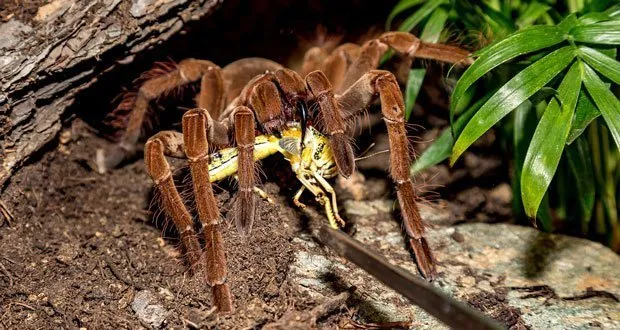
Giant tarantulas are primarily carnivores, and their diet consists of a variety of prey items, including insects, small reptiles, amphibians, and even small mammals. Their feeding habits involve a combination of ambush and active hunting strategies. They often lie in wait for prey near their burrows or hiding places, ambushing them when they come close. These spiders use their fangs to inject venom, which immobilizes and begins to digest their prey. After subduing their target, they use their chelicerae to grind their food, consuming the nutritious liquid. Their feeding frequency varies depending on their size, the availability of food, and their metabolic rate. Young tarantulas tend to eat more frequently than adults. (Image: giant-tarantula-feeding.webp)
What do Giant Tarantulas eat?
The diet of a giant tarantula is surprisingly diverse, depending on the species and its habitat. Common food items include insects such as crickets, cockroaches, and beetles. However, as they grow larger, they may also hunt larger prey like lizards, small snakes, frogs, and even small rodents. In some cases, they have been known to consume birds or other small animals that they can overpower. The size of the prey that they can handle increases as they age. Their hunting habits and food choices provide crucial insights into their role within the ecosystem. The diversity of their diet allows them to thrive in a wide range of environments, illustrating their adaptability as predators.
Hunting Techniques
Giant tarantulas employ a variety of hunting techniques to capture their prey. Some species are ambush predators, remaining still near their burrows and waiting for prey to pass by. Others actively hunt by stalking their prey on the ground, using their speed and agility to capture them. They possess sensory hairs on their legs called trichobothria, which detect vibrations in the air, allowing them to sense the presence of potential prey. Once a suitable target is detected, the tarantula strikes quickly, using its fangs to inject venom. The venom not only paralyzes the prey but also begins the digestion process, making it easier for the spider to consume its meal. Different species have evolved specific hunting strategies to thrive in their specific ecological niches, providing further evidence of their remarkable adaptability.
Giant Tarantula Behavior and Temperament

Giant tarantulas exhibit a range of behaviors and temperaments, which vary depending on the species. Some species are known for their docile nature, while others are more defensive and can be quick to react if they feel threatened. They are generally solitary creatures, except during mating season. Their behaviors include burrowing, hunting, and molting. Molting is a crucial process where they shed their exoskeleton to grow, which leaves them vulnerable. They typically avoid conflict unless provoked, preferring to escape or defend themselves if they perceive a threat. Understanding their behavior is essential for anyone who comes into contact with these spiders, whether in the wild or in captivity. (Image: giant-tarantula-defense.webp)
Defensive Mechanisms
Giant tarantulas have several defensive mechanisms to protect themselves from predators. One common defense is the use of urticating hairs, which they can flick off their abdomens toward potential threats. These hairs cause skin irritation and discomfort. Another defense mechanism is the ability to bite, injecting venom that can cause pain and, in some cases, allergic reactions. They may also raise their front legs, exposing their fangs, as a warning signal to deter potential attackers. The specific defensive strategies vary among species, reflecting the adaptations necessary for survival in their respective habitats. These defense mechanisms ensure the tarantulas are less likely to fall prey.
Lifespan and Reproduction of Giant Tarantulas
The lifespan of a giant tarantula can vary significantly depending on the species, with females generally living longer than males. Female tarantulas can live for up to 20-30 years in some species, while males typically live for only 5-10 years. Reproduction involves a complex mating ritual where the male transfers sperm to the female. After mating, the female creates an egg sac, which she fiercely protects. The number of eggs in the sac can vary depending on the species, but can range from a few dozen to several hundred. Once the spiderlings hatch, they undergo several molts before reaching maturity. (Image: giant-tarantula-mating.webp)
Mating and Egg Laying

The mating process of giant tarantulas is often a delicate and potentially dangerous undertaking for the male. The male must approach the female cautiously, often using a specific courtship ritual to avoid being perceived as prey. If the mating is successful, the male deposits sperm into the female’s epigastric furrow, where the eggs are fertilized. Following mating, the female will create a silken egg sac, in which she deposits her eggs. She guards this sac carefully, turning it to maintain the right temperature and humidity levels. After a period of incubation, the spiderlings hatch and begin their independent lives, undergoing several molts as they grow. The survival of the species depends on this critical reproductive cycle.
Conservation Status of Giant Tarantulas
The conservation status of giant tarantulas varies depending on the species and their respective habitats. Some species are considered to be of least concern, while others face threats such as habitat loss, deforestation, and the illegal pet trade. Conservation efforts are crucial to protect these fascinating creatures. Assessing population numbers and their trends provides key information to formulate effective conservation strategies. Efforts to preserve the natural habitats of tarantulas are crucial for their survival. Public education and awareness campaigns can also help to reduce the impact of the illegal pet trade. Understanding the threats faced by these creatures is the first step in developing and implementing strategies for their conservation. (Image: giant-tarantula-conservation.webp)
Threats and Conservation Efforts
Giant tarantulas face several threats that jeopardize their survival. Habitat destruction is one of the most significant, as deforestation and land conversion reduce their living spaces. The illegal pet trade also poses a considerable threat, as these spiders are often collected from the wild for sale. Conservation efforts include habitat protection, sustainable land management practices, and initiatives to regulate and reduce the illegal pet trade. Promoting responsible pet ownership and educating the public about the importance of these creatures is essential. Cooperation between scientists, conservation organizations, and governments is crucial for protecting these amazing creatures and ensuring their continued presence in the ecosystems they inhabit.