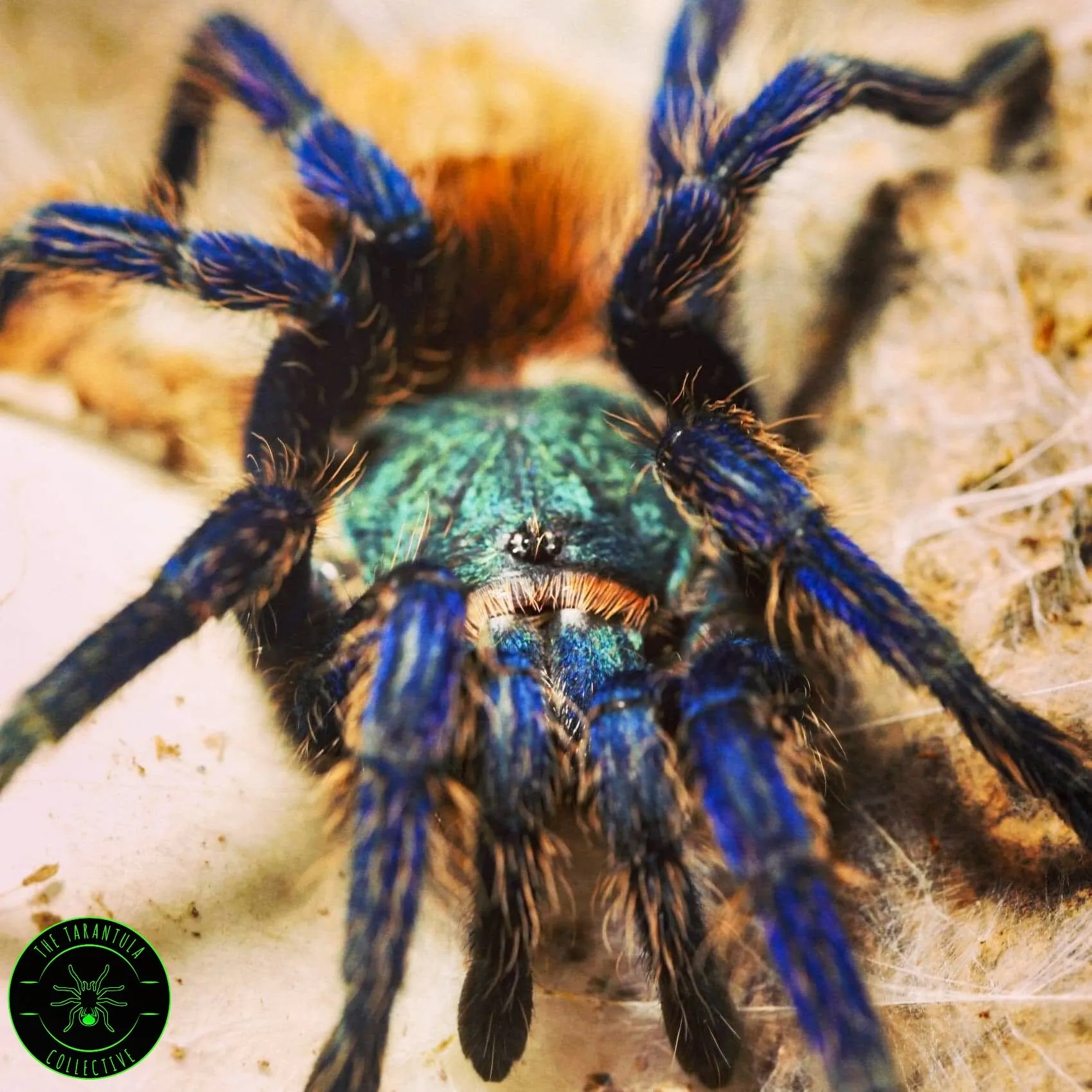
Understanding the Green Blue Bottle Tarantula (GBB)
The Green Blue Bottle Tarantula (Chromatopelma cyaneopubescens), often called the GBB, is a visually stunning and relatively popular pet tarantula. Native to the coastal regions of Venezuela and Trinidad, the GBB is prized for its striking coloration — juveniles exhibit a vibrant mix of orange, blue, and green hues that become more pronounced as they mature. These tarantulas are known for their web-spinning abilities, creating elaborate and visually appealing habitats. Their semi-arboreal nature means they appreciate some height in their enclosure. Before bringing a GBB home, it is crucial to understand their specific needs to ensure their well-being. This care sheet provides comprehensive guidance, from habitat setup and feeding to handling and health considerations, to help you successfully care for your GBB.
GBB Tarantula Habitat Setup
Creating the right habitat is essential for the health and happiness of your GBB. The enclosure should be appropriately sized, well-ventilated, and designed to maintain the necessary temperature and humidity levels. Proper setup mimics the tarantula’s natural environment, providing them with the space to thrive, feel secure, and exhibit their natural behaviors. A well-designed enclosure will also make it easier for you to observe your tarantula and keep the environment clean. A poorly designed habitat can lead to stress, health issues, and a shorter lifespan for your pet. The following sections will delve into the specifics of enclosure size, substrate, temperature, and humidity, ensuring you create an optimal living space for your GBB.
Enclosure Size and Type

For a juvenile GBB, a terrarium of approximately 10 gallons (e.g., 12x12x12 inches) is suitable. As they grow, you will need to upgrade the enclosure. An adult GBB requires an enclosure of at least 20 gallons (e.g., 18x18x18 inches) or larger. The enclosure should be made of clear material, such as glass or acrylic, to allow for easy viewing. While GBBs are terrestrial, they are also semi-arboreal, so the height of the enclosure is essential. Ensure the enclosure has a secure, well-ventilated lid to prevent escapes. Cross-ventilation is beneficial for maintaining air quality and preventing mold growth. Avoid enclosures with screen tops alone, as they can be difficult to maintain proper humidity.
Substrate Selection
The substrate is the bedding material that lines the bottom of the enclosure and plays a crucial role in maintaining humidity, providing a comfortable surface for the tarantula, and allowing it to burrow or anchor itself. A substrate that holds moisture but doesn’t become waterlogged is ideal. Suitable options include a mix of coco fiber, peat moss, and a small amount of vermiculite. These substrates retain moisture effectively and allow the tarantula to create webbing and feel secure. Avoid substrates like sand or gravel, which do not retain humidity well and can be abrasive. The substrate depth should be roughly 3-4 inches to allow for burrowing and web construction. Regularly monitor the substrate for mold or excessive dryness and replace it as needed.
Temperature and Humidity Control
GBBs thrive in temperatures between 75-85°F (24-29°C). Maintain this temperature range using a heat lamp or a heat mat attached to the side of the enclosure (never directly under the enclosure). Use a thermostat to regulate the heat source and prevent overheating. Humidity levels should be maintained between 65-75%. This can be achieved by misting the enclosure lightly with dechlorinated water every few days or as needed, but ensure that the substrate isn’t consistently wet. Proper ventilation is essential to prevent mold growth. Use a hygrometer to monitor humidity levels accurately. A shallow water dish with clean water should always be available for drinking.
GBB Tarantula Feeding and Diet

A balanced diet is essential for your GBB’s health and growth. Tarantulas are carnivores and primarily feed on insects. The size and type of food offered should be appropriate for the tarantula’s size. Overfeeding can lead to health problems, while underfeeding can stunt growth. Always provide fresh, clean water. Regular feeding and appropriate water access will promote a healthy and active tarantula.
Choosing the Right Food
Appropriate food options for GBBs include crickets, mealworms, dubia roaches, and other commercially available insects. The insects should be gut-loaded (fed nutritious food) before being offered to your tarantula to provide the best nutritional value. Avoid feeding wild-caught insects, as they may carry parasites or pesticides that can be harmful to your pet. The size of the prey should be roughly the same size as the tarantula’s abdomen or slightly smaller. Offer a variety of insects to ensure a balanced diet.
Feeding Frequency
Juvenile GBBs should be fed 2-3 times a week. Adults can be fed once a week or even less frequently, depending on their size and activity level. Remove any uneaten food within 24 hours to prevent mold growth and maintain a clean enclosure. It is normal for tarantulas to refuse food before and during molting; do not be alarmed if this happens. Always observe your tarantula’s behavior and adjust the feeding schedule accordingly. If your tarantula appears to be getting fat, reduce the frequency or size of the meals.
Watering and Hydration

Clean, fresh water should always be available. Use a shallow water dish that is easily accessible, and ensure the water dish is not too deep to prevent the tarantula from drowning. Replace the water regularly, at least every other day, and clean the dish to prevent the buildup of bacteria. You can also provide hydration by misting the enclosure lightly, especially during molting, which helps increase humidity and aids the process. Ensure the enclosure has proper ventilation to avoid stagnant humidity that can cause health issues.
GBB Tarantula Handling and Safety
While GBBs are not generally considered aggressive, handling them can still pose risks to both the tarantula and the handler. Their venom is mild, but their bite can be painful. Their urticating hairs can also cause skin irritation. Therefore, it is best to avoid handling them unless absolutely necessary, such as for essential health checks or enclosure maintenance. Prioritizing the tarantula’s safety and your own well-being is paramount. Understanding their behavior and practicing caution will help you minimize risks and ensure a positive experience for both you and your pet.
Avoiding Bites and Defensive Behaviors
GBBs may bite if they feel threatened. Avoid sudden movements and loud noises near the enclosure. Never provoke your tarantula. If you need to move or interact with your tarantula, use a long pair of tongs or a clear container to gently coax it into a safe space. Always be calm and patient. If the tarantula postures defensively (rearing up, showing fangs), do not attempt to handle it. Observe the tarantula’s behavior and body language to gauge its mood and avoid potential bites. Handling should only be done if absolutely essential, and even then, with extreme caution.
Identifying Potential Health Issues

Observing your GBB for signs of illness or distress is crucial for its well-being. Changes in behavior, such as lethargy, loss of appetite, or unusual posture, can indicate a health problem. Regularly inspect the tarantula’s abdomen and legs for any signs of injury, parasites, or infections. A healthy GBB should be active, have a good appetite, and have a shiny exoskeleton. Early detection of health issues can improve the chances of successful treatment and ensure a long, healthy life for your pet. If you notice anything unusual, take action immediately.
Common Health Problems
Some common health issues in GBBs include parasites, fungal infections, and injuries from falls or handling. Parasites can often be identified by examining the feces or noticing abnormal behavior. Fungal infections can occur if the enclosure is too humid and poorly ventilated. Injuries, such as damaged legs or a ruptured abdomen, can occur if the tarantula falls or is mishandled. Preventative measures include maintaining proper enclosure conditions, providing a balanced diet, and avoiding stressful situations. If you suspect a health issue, isolate the tarantula if possible and seek advice from a qualified veterinarian or experienced tarantula keeper.
When to Seek Veterinary Advice
Consult a veterinarian specializing in exotic animals if you notice any severe symptoms, such as paralysis, loss of appetite lasting more than a few weeks, or significant injuries. A vet can diagnose the problem and provide appropriate treatment. If you are unsure about the cause of a problem, it is always best to seek professional advice. Early intervention can significantly improve the prognosis and ensure your GBB receives the best possible care. Be prepared to provide the vet with information about the tarantula’s environment, diet, and any recent changes.
GBB Tarantula Molting Process

Molting is a natural process where a tarantula sheds its exoskeleton to grow and regenerate damaged limbs or body parts. Understanding the molting process is essential for providing the right care during this vulnerable time. Avoid disturbing the tarantula during molting, and provide a safe and secure environment. The frequency of molting decreases as the tarantula ages, but each molt is a critical part of its life cycle.
Signs of Molting
Before molting, a GBB may become less active and stop eating. Its abdomen may appear dark, and it may create a web mat to lay on. The tarantula may also appear sluggish. You might notice the old exoskeleton beginning to separate from the new one. These signs indicate that the tarantula is preparing to molt, and it is crucial to avoid any disturbance during this process. Provide a quiet and undisturbed environment during the molting phase to help reduce stress.
Post-Molting Care
After molting, the tarantula’s exoskeleton will be soft and vulnerable. Do not feed the tarantula for a week or two until its fangs have hardened. Provide access to water, and maintain the usual temperature and humidity levels. Avoid handling the tarantula until its exoskeleton has fully hardened. Once the fangs are hardened, you can resume feeding. Monitor your GBB during this period and adjust its care as needed. Proper post-molt care is essential for ensuring a successful molt and the continued health of your tarantula.
GBB Tarantula Top 5 Care Tips for Beginners

Caring for a GBB can be a rewarding experience. Here are the top 5 tips to get you started.
- Provide an appropriately sized, well-ventilated enclosure with proper temperature and humidity.
- Offer a varied diet of gut-loaded insects.
- Handle your GBB only when necessary, and with extreme caution.
- Monitor your tarantula for any signs of illness and address any issues promptly.
- Learn and respect the molting process
By following these guidelines, you can help ensure your GBB lives a long, healthy, and visually stunning life. Remember to research thoroughly and always prioritize the well-being of your pet.