Tarantula Facts Top 5 You Need to Know
Tarantulas, often feared and misunderstood, are actually fascinating creatures with a wealth of interesting facts. These large, hairy spiders have captured the imagination of people around the world. From their impressive size to their unique behaviors, tarantulas offer a glimpse into the diverse and often surprising world of arachnids. This article delves into some of the most compelling facts about tarantulas, providing an understanding of these amazing animals. Prepare to be amazed by the secrets of the tarantula, a creature that is far more intriguing than scary. Get ready to discover facts that will change the way you see these remarkable arachnids and add depth to your knowledge of the natural world and the creatures that inhabit it.
What are Tarantulas?
Tarantulas belong to the Theraphosidae family, a group of large and often hairy spiders. They are found in various habitats worldwide, primarily in tropical and subtropical regions. These spiders are known for their size, with some species having leg spans of over 10 inches. Tarantulas are generally nocturnal hunters, feeding on insects, and sometimes even small vertebrates. They are known for their relatively long lifespans, with females often living for over 20 years. The appearance of tarantulas can vary greatly depending on the species, with colors ranging from earthy browns to vibrant blues and oranges. Understanding the basic characteristics of tarantulas is the first step toward appreciating the incredible diversity within this spider family.
Brief Description

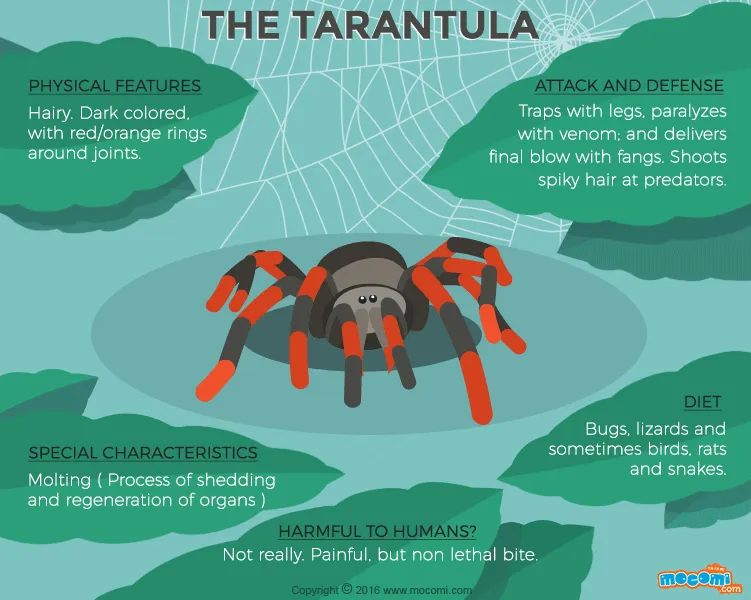
Tarantulas are characterized by their large size, hairy bodies, and eight legs. They have two body segments, the cephalothorax (fused head and thorax) and the abdomen. Their fangs, used for injecting venom, are located on the chelicerae, which are appendages near their mouths. Tarantulas also possess pedipalps, small leg-like appendages near their mouth, used for manipulating food and sensory purposes. The size and coloration of tarantulas vary considerably, depending on the species, and they are covered in sensory hairs that help them detect vibrations and other environmental changes. These features define them as unique creatures.
Tarantula Habitats
Tarantulas are found in a wide range of habitats, from rainforests and grasslands to deserts and mountains. Their habitat preferences depend on the species, with some tarantulas being terrestrial, constructing burrows in the ground, while others are arboreal, living in trees. The specific requirements for a habitat include a suitable microclimate, with the appropriate temperature and humidity, and access to food sources. Many tarantulas are native to the Americas, but they are also found in Africa, Asia, and Australia. Understanding where tarantulas live is essential for comprehending their behavior, feeding habits, and overall lifestyle and how they adapt to diverse environments.
Where Do They Live?
Tarantulas typically inhabit warm climates, with the majority found in tropical and subtropical regions. The specific location will vary depending on the species, but they can be found in environments as diverse as tropical rainforests, arid deserts, and even suburban areas. Terrestrial tarantulas often burrow into the ground or live in natural crevices, while arboreal species make their homes in trees or other elevated structures. The availability of food, shelter, and suitable environmental conditions determines their distribution. Their ability to adapt to a range of climates and environments adds to the tarantula’s resilience and success as a species.
5 Fun Tarantula Facts

Tarantulas Have Fangs
Like all spiders, tarantulas have fangs, or chelicerae, which they use to inject venom into their prey. These fangs are relatively large, and their size is one of the things that make them intimidating to some people. The fangs are used not only for delivering venom but also for grasping and manipulating their food. While tarantula venom is not generally considered to be deadly to humans, a bite can be painful and cause localized symptoms such as redness, swelling, and itching. Despite the presence of fangs and venom, tarantulas are not aggressive and generally only bite if they feel threatened or provoked.
Venomous, But Not Deadly
Tarantula venom is typically not life-threatening to humans, unlike the venom of some other spider species. The venom is primarily used to subdue prey, causing paralysis. Human bites from tarantulas can cause discomfort, swelling, and localized pain, similar to a bee sting. However, serious complications are rare. Allergic reactions are possible, and medical attention should be sought if severe symptoms develop. Despite their venomous nature, tarantulas are not considered dangerous to humans, and bites are relatively infrequent.
They Molt Their Skin

Tarantulas, like all arthropods, undergo a process called molting, or ecdysis. This is the process where they shed their exoskeleton to allow for growth. As the tarantula grows, its outer shell becomes too tight, and molting allows it to get a new, larger exoskeleton. Molting is a vulnerable time for the tarantula because it is soft and defenseless during this period. This process is essential for the tarantula’s development and longevity, as it facilitates growth and regeneration. The molting frequency varies with age and species.
The Molting Process
Before molting, the tarantula prepares by creating a soft layer of new cuticle beneath its existing exoskeleton. The old exoskeleton then splits open, and the tarantula gradually wriggles out, leaving behind a complete cast of its old form. The newly molted tarantula is soft and pale, and it may take several days or weeks for its new exoskeleton to harden fully. During this period, the tarantula is especially vulnerable to predators. The molting process is a remarkable display of biological adaptation, allowing for growth and renewal in these fascinating arachnids.
Tarantulas Can Regenerate Limbs
One of the most amazing facts about tarantulas is their ability to regenerate lost limbs. If a tarantula loses a leg, it can slowly grow a new one over several molts. This process may not perfectly replicate the original limb, but it functions adequately. The ability to regenerate limbs is a significant adaptation, providing a survival advantage, particularly in situations where a tarantula may have lost a limb due to a predator or injury. Tarantulas are one of the few animals that possess this ability. The regeneration is not instantaneous. The process can take several molts to fully restore the missing limb.
How Does Regeneration Work?

The regeneration process starts with the formation of a bud at the site of the missing limb. Over subsequent molts, this bud develops into a fully functional leg. The new limb, or a part of it, usually appears with each molting cycle, and, over time, the regenerated limb takes on its full shape and function. While the regenerated limb might not be identical to the original, it still allows the tarantula to move, hunt, and carry out essential activities. This amazing ability showcases the tarantula’s resilience and adaptability in the face of adversity. This remarkable ability highlights the complexity of their biology and resilience.
They Spin Silk
Tarantulas, like all spiders, produce silk. They have spinnerets on the underside of their abdomen, which they use to produce silk. The silk is an incredibly versatile material, used for a variety of purposes, including creating webs for catching prey, constructing shelters, and creating draglines. Tarantula silk is exceptionally strong and flexible, and is more advanced than many other spider species. Although they don’t create elaborate webs like some spiders, tarantulas still rely on silk to aid in their survival.
Uses of Tarantula Silk
Tarantulas use their silk for several functions, including creating draglines, which act as safety lines as they move around. They also use silk to line their burrows, providing a comfortable and secure habitat. Furthermore, they may use silk to wrap their eggs and prey, and some species even use silk to build intricate trapdoors. The versatility and strength of tarantula silk are remarkable, making it a critical component of their survival strategy and adding to their survival. The silk has multiple uses, including construction, hunting, and protection.
Tarantulas are Hunters

Tarantulas are primarily nocturnal hunters, waiting patiently for their prey to come within range. They use their fangs to inject venom, which paralyzes the prey before they consume it. Their diet typically consists of insects, but larger tarantulas may also prey on small vertebrates like lizards, frogs, and even small birds. Tarantulas are ambush predators, relying on stealth and quick reflexes. Their hunting behavior is a fascinating adaptation that highlights the efficiency of their hunting strategies.
Their Diet
The diet of tarantulas varies depending on their size and habitat, but they primarily feed on insects such as crickets, beetles, and cockroaches. Larger tarantulas will also consume small vertebrates. Tarantulas ambush and subdue their prey using their fangs and venom. They have strong jaws and enzymes to break down and digest their food. The tarantula’s diet is a key factor in its survival. Their ability to hunt different types of prey, and their dietary habits, allow tarantulas to thrive in various environments.
Conclusion
Tarantulas are captivating creatures, offering a wealth of interesting facts that go beyond their intimidating appearance. From their ability to regenerate limbs and the strength of their silk to their venomous fangs and adaptable hunting strategies, tarantulas are marvels of the natural world. Understanding these facts allows us to appreciate the complexity and diversity of these fascinating arachnids. Their unique characteristics and behaviors make them an important part of the ecosystem, deserving of respect and appreciation. As you have learned here, tarantulas are not just scary spiders; they are an essential part of our natural world.