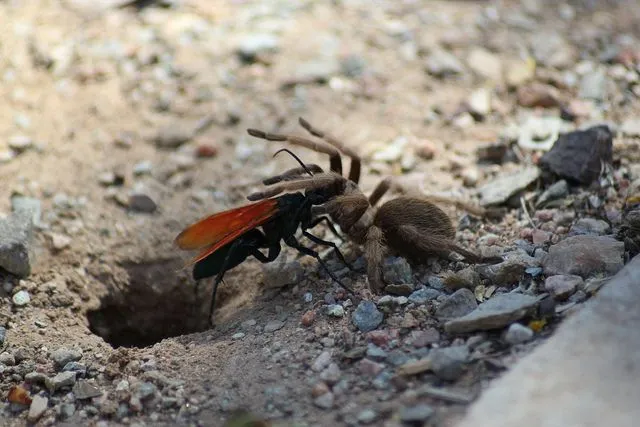
What is a Tarantula Hawk
The tarantula hawk, a member of the Pompilidae family, is a spider wasp known for its impressive size and notoriously painful sting. These wasps are among the largest wasps in the world, with some females reaching over two inches in length. Their striking appearance, often featuring a black or blue body with orange or rust-colored wings, makes them easily recognizable. Found primarily in arid regions of the Americas, from the southwestern United States to South America, the tarantula hawk is a fascinating creature, embodying both beauty and a formidable predatory nature. Their entire existence revolves around the capture and utilization of tarantulas, making them a unique example of parasitoid behavior. Their life cycle is a testament to nature’s intricate designs, combining both elegance and a certain degree of brutality. Known for their unique way of life and the role they play in their ecosystems, they stand out as truly remarkable insects.
Appearance and Identification
Identifying a tarantula hawk is relatively straightforward due to its distinctive appearance. The most common color scheme consists of a black or dark blue body contrasting sharply with bright orange or rust-colored wings. The body itself is robust and elongated, reflecting the wasp’s predatory lifestyle and large size. Size is also a key identifier, with females being significantly larger than males. They possess long legs, which are essential for their hunting and nesting behaviors. Keep an eye out for the characteristic antennae, which they use to sense their environment. When observed in flight, the wasp’s large wings and distinctive coloration make them easily stand out against the arid landscapes they inhabit. The combination of these physical traits ensures that, once seen, the tarantula hawk is unlikely to be mistaken for any other insect.
Habitat and Distribution

The tarantula hawk’s habitat is primarily dictated by the presence of its prey, tarantulas, and suitable conditions for nesting. They thrive in arid and semi-arid regions. This includes the deserts and scrublands of the southwestern United States, Mexico, and down into South America. Within these regions, they are often found in areas with sandy or loamy soils, as these are ideal for digging their nests. The availability of tarantulas is critical; therefore, their distribution closely mirrors that of their prey. The warmer temperatures and dry environments provide the perfect conditions for their survival and activities. They can often be spotted in open, sunny areas where they hunt for tarantulas or search for suitable nesting sites. Understanding their habitat is key to appreciating their role in the ecosystem.
Hunting and Paralyzing Tarantulas
The hunting process of the tarantula hawk is a remarkable display of predatory prowess. The female wasp actively searches for tarantulas, which are typically found in burrows or under rocks. Once a tarantula is located, the wasp engages in a brief, yet intense, battle. The wasp will sting the spider, delivering a paralyzing venom. The sting, aimed precisely at the spider’s nervous system, effectively immobilizes the tarantula, but does not kill it. Once paralyzed, the wasp drags the tarantula, often many times its size, back to a pre-dug nest or burrow. This feat of strength and determination is a testament to the wasp’s evolutionary adaptations for survival and reproduction. The hunting strategy is both brutal and efficient, highlighting the tarantula hawk’s role as a highly specialized predator within its ecosystem.
The Sting The Pain and the Aftermath
The tarantula hawk’s sting is often described as one of the most painful stings in the insect world, ranked second only to the bullet ant. The pain is characterized by an immediate, intense, and excruciating sensation that can last for several minutes. It is often described as a searing pain that can be accompanied by a feeling of complete disorientation. The sting is not typically life-threatening to humans, but it is an experience that few who have encountered it will forget. After the initial pain subsides, the area around the sting may remain red and swollen for a period of time. The wasp’s venom, while potent, is designed to paralyze its prey, not to cause lasting harm to humans. However, the intense pain serves as a deterrent, warning potential threats to avoid the wasp. Despite the painful sting, the tarantula hawk is generally not aggressive and will only sting if provoked or threatened.
Survival and Defense Mechanisms

The tarantula hawk has several survival and defense mechanisms that help it thrive in its harsh environment. Its powerful sting, while primarily used to paralyze prey, also serves as a formidable defense against potential predators. The wasp’s size and robust build also offer a degree of protection, making it difficult for smaller predators to attack. Coloration also plays an important role; the striking colors serve as a warning to potential threats that the wasp is dangerous. Furthermore, their ability to fly quickly and maneuver in flight allows them to evade predators. The tarantula hawk’s survival strategy is not just about hunting but also about avoiding becoming a meal itself. The combination of these defense mechanisms allows them to survive in a challenging environment.
Diet and Feeding Habits
The tarantula hawk’s diet is remarkably specialized. The primary food source for the wasp larvae is the paralyzed tarantula. The female wasp meticulously prepares a nest, either in a burrow or a pre-existing cavity, and then drags the paralyzed spider inside. She then lays a single egg on the spider’s abdomen. Once the egg hatches, the larva begins to feed on the still-living, but paralyzed, tarantula. The larva consumes the spider from the outside in, ensuring that the vital organs are preserved for as long as possible to keep the meal fresh. This provides the larva with the sustenance it needs to grow and develop. Adult tarantula hawks, on the other hand, feed primarily on nectar from flowers. They require a diet rich in sugar for energy, which fuels their active lifestyle, including hunting and nest building.
Lifecycle and Reproduction
The tarantula hawk’s lifecycle is a fascinating example of parasitoid behavior. It begins with the female wasp’s meticulous nest preparation and her search for a tarantula. After paralyzing the spider, she drags it to the nest and lays a single egg on its abdomen. The egg hatches into a larva, which immediately begins feeding on the paralyzed spider. The larva grows and molts, consuming the spider over several weeks. Once the spider is completely consumed, the larva pupates within the spider’s exoskeleton. It undergoes metamorphosis, transforming into an adult wasp. The adult wasp then emerges from the nest, ready to begin the cycle anew. The entire process, from egg to adult, takes several weeks to months, depending on environmental conditions. The cycle is a testament to the remarkable adaptation of this insect, ensuring its survival in its harsh environment.
Conservation Status and Threats

The tarantula hawk is not currently listed as a threatened or endangered species. Their wide distribution and the abundance of their prey, the tarantula, contribute to their relatively stable populations. However, habitat loss and the use of pesticides can pose threats to their survival. Changes in land use, such as deforestation and urbanization, can reduce the availability of suitable nesting sites and disrupt their food source. Pesticides can also indirectly affect tarantula hawk populations by harming their prey. Climate change, with its potential impacts on their habitat and prey distribution, could also pose long-term threats. Conservation efforts focus on preserving their habitats and promoting responsible land management practices. Raising awareness about the importance of these insects and their role in the ecosystem is also important.
In conclusion, the tarantula hawk is a remarkable insect, embodying both beauty and a formidable predatory nature. Its unique lifestyle, involving the hunting and parasitization of tarantulas, sets it apart as a fascinating example of nature’s intricate designs. While the sting is notoriously painful, the wasp is generally not aggressive. Understanding their habitat, lifecycle, and the threats they face is crucial to appreciating their role in their ecosystems. From their striking appearance to their specialized diet, tarantula hawks are a testament to the diversity and wonder of the insect world. Through ongoing conservation efforts and increased awareness, we can ensure the continued survival of these unique and vital creatures.