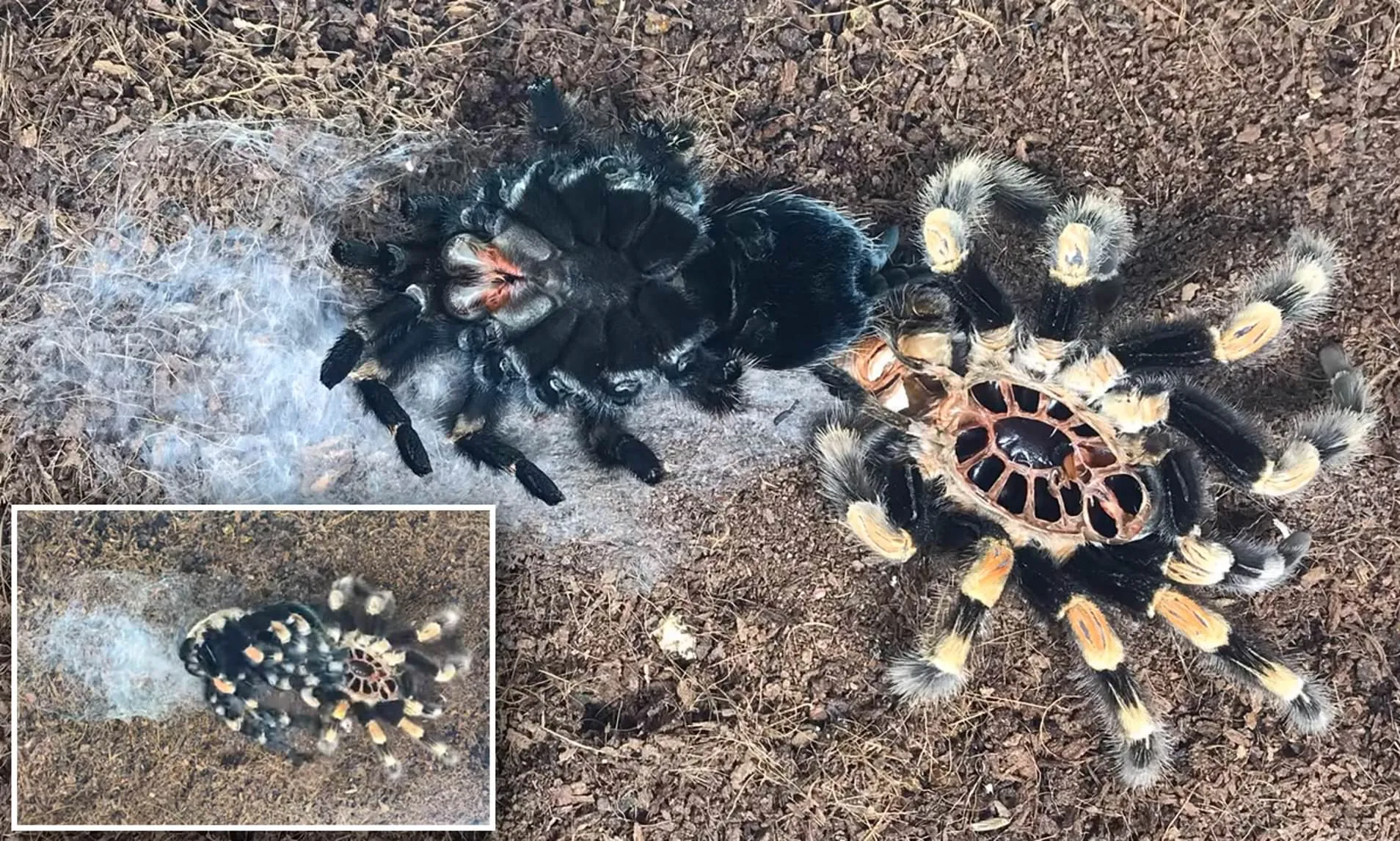
What is Tarantula Molting
Tarantula molting is a natural and essential process for these fascinating creatures, similar to snakes shedding their skin. It’s how tarantulas grow and regenerate various body parts, including their exoskeleton, internal organs, and even lost limbs. This process allows them to shed old, worn-out exoskeletons and reveal a new, larger one beneath. The frequency of molting depends on the tarantula’s age, species, and overall health, with young tarantulas molting more frequently than adults. Molting is a vulnerable time for a tarantula, as they are soft and defenseless, making it crucial to understand and support this natural process.
The Molting Process
The molting process is a remarkable event, starting with the tarantula absorbing fluids to separate its old exoskeleton from the new one forming underneath. They will typically lie on their backs during the process. The old exoskeleton splits open, often along the carapace (the top of the cephalothorax) and the leg joints, allowing the tarantula to slowly wriggle free. This can take several hours, depending on the size of the tarantula. Once free, the tarantula will be incredibly soft and vulnerable. The new exoskeleton will gradually harden over several days, during which time the tarantula will be very sensitive to environmental changes and potential predators.
Pre-Molting Signs

Recognizing the signs of an impending molt is key to providing the right care for your tarantula. Several indicators can alert you to this exciting phase. One of the most common signs is a change in the tarantula’s behavior; they might become more reclusive, spending more time hiding in their burrow or a secluded part of their enclosure. They may also refuse food, as eating becomes difficult during the pre-molt period. The abdomen may darken considerably, and the tarantula’s appearance might become dull and less vibrant. Finally, the tarantula’s abdomen may appear swollen or stretched, indicating the new exoskeleton is ready to emerge.
Appearance of Molting Tarantula
During the pre-molt period, the tarantula’s overall appearance changes noticeably. The abdomen will typically become much darker, almost black in some species. The skin between the segments on the legs may become more translucent. The fangs, which are part of the exoskeleton, will also appear softer and lighter in color. The tarantula may also appear sluggish and less active than usual. Keep a close watch on these subtle but important cues. It’s important to provide a secure and undisturbed environment for your pet during the pre-molt phase, minimizing any potential stress or disturbances.
How to Prepare
Preparing for a tarantula molt involves creating an ideal environment for the process. This includes ensuring the enclosure is clean and providing appropriate substrate, which is typically a mixture of coco fiber, peat moss, or vermiculite. This provides a suitable medium for the tarantula to dig and create a burrow if it chooses. Remove any uneaten food or water dishes to prevent the risk of mold and bacteria growth. It’s crucial to ensure the enclosure has sufficient space for the tarantula to maneuver during the molt and that it’s free of any potential hazards, such as sharp objects or heavy decorations that could injure the tarantula while it’s in a vulnerable state.
Maintaining Proper Humidity

Humidity plays a vital role in a tarantula’s molting process. Maintaining the correct humidity level helps the tarantula shed its old exoskeleton without difficulty. The level varies depending on the tarantula species, but most require a humidity level between 60-80%. You can maintain humidity by misting the enclosure with dechlorinated water once or twice a week or by ensuring the substrate is slightly moist. Regular monitoring with a hygrometer is crucial to maintaining the proper level. Poor humidity levels can cause the tarantula to struggle with molting, leading to serious health issues.
Providing a Safe Environment
During the molting process, it is crucial to provide a safe, undisturbed environment. Avoid handling the tarantula during the molt and for several days afterward until its new exoskeleton has hardened. Ensure the enclosure is in a quiet area away from loud noises, vibrations, and sudden movements that could potentially startle or stress the tarantula. Cover the enclosure partially with a dark cloth or place it in a dimly lit area to provide additional security. Regularly inspect the enclosure to ensure no potential threats, such as other pets or insects, can access the tarantula. This helps in ensuring a successful and stress-free molting experience for your pet.
What to Avoid
During the molting process, there are several things you should avoid to ensure the tarantula’s safety and well-being. Avoid handling your tarantula until its new exoskeleton has fully hardened. Don’t disturb the tarantula or move its enclosure unnecessarily, as this could disrupt the molting process or cause stress. Do not offer food until at least a week after the molt, and only offer small, easily digestible meals. Avoid excessive misting, as too much moisture can lead to mold or bacterial growth in the enclosure, posing a risk to the tarantula. Minimize any environmental changes, such as temperature fluctuations or sudden light changes, as these can stress the tarantula.
Feeding Your Tarantula

Refrain from feeding your tarantula during the pre-molt and molting phases. Tarantulas typically lose their appetite before molting. Trying to feed a tarantula during this time can cause stress, potentially leading to the tarantula abandoning the molt. Wait at least a week after the molt before offering food. Start with small, easily digestible prey items, such as a pre-killed mealworm or a small cricket. Observe your tarantula to ensure it’s eating and digesting the food properly before offering larger meals. Gradually increase the size of the prey as the tarantula’s appetite returns. This slow and steady approach helps prevent digestive problems post-molt.
Handling Your Tarantula
Avoid handling your tarantula before, during, and after molting until its new exoskeleton has fully hardened. During this vulnerable period, the tarantula’s body is soft and fragile, making it susceptible to injury if handled. Even a minor fall can be fatal. Refrain from any unnecessary handling or touching to minimize stress and potential harm. Wait until the new exoskeleton has hardened, which can take several days to a week, before resuming normal interactions. This will help ensure the tarantula’s well-being and prevent accidental injuries.
Post-Molting Care
After molting, your tarantula is in a vulnerable state, but it’s also growing and improving. The newly molted tarantula is soft and susceptible to injury until its exoskeleton hardens. It will take a few days to a week for the new exoskeleton to fully harden, during which time, your tarantula will be more sensitive. Continue to maintain proper humidity levels and provide a safe, undisturbed environment. It’s an exciting time to observe the tarantula’s new colors and appearance. Remember to be patient and provide gentle care during this phase to ensure the tarantula recovers well and thrives.
Offering Food

Wait at least a week after the molt before offering food to your tarantula. Its fangs need to fully harden to effectively catch and consume prey. When you decide to feed, start with a small, soft-bodied prey item like a pre-killed mealworm or a small cricket. Observe your tarantula’s feeding behavior to ensure it’s eating and digesting properly. The tarantula’s appetite will gradually increase, so you can slowly increase the size of the prey items as needed. Always ensure the prey is no larger than the tarantula’s body size to prevent potential injuries.
Watching for Color Changes
After molting, pay attention to the changes in your tarantula’s coloration. The new exoskeleton often showcases brighter, more vibrant colors compared to the previous one. The patterns on the tarantula’s body might also appear more defined. These color changes are a natural part of the growth process and can vary depending on the species and genetics. Observing these aesthetic changes can be an exciting aspect of tarantula keeping, providing a glimpse into the health and well-being of your pet. Documenting these changes with photographs can also be a rewarding way to track your tarantula’s growth and development over time.
Troubleshooting Molting Problems
While molting is a natural process, problems can arise, requiring prompt attention. Identifying and addressing these problems early on can significantly improve the tarantula’s chances of a successful molt and overall health. Always remain vigilant to prevent complications and to provide the best possible care. If you notice any issues during the molting process, it’s essential to remain calm and avoid unnecessary interventions. Provide the appropriate support and environment. Contact an experienced tarantula keeper or a veterinarian specializing in exotic pets for advice if you encounter serious problems.
Stuck Molt

A stuck molt is a serious and potentially life-threatening issue. It occurs when the tarantula is unable to fully shed its old exoskeleton. This can happen for several reasons, including low humidity, poor health, or an injury. If you notice that your tarantula is struggling to molt, the most crucial thing is to maintain the appropriate humidity levels in the enclosure. Ensure that the substrate is moist, and the enclosure is properly ventilated. Never pull the exoskeleton, as this can cause serious damage. If the tarantula is unable to free itself after a reasonable amount of time, you may need to consult an experienced tarantula keeper or a veterinarian, as they might be able to assist safely.
Dehydration
Dehydration can cause significant issues during the molting process. A dehydrated tarantula may struggle to separate the old exoskeleton from the new one, which can lead to a stuck molt or other complications. Ensure your tarantula has access to fresh, clean water at all times. You can provide water in a shallow dish or by misting the enclosure regularly. Monitor the tarantula for signs of dehydration, such as a shrunken abdomen or lethargy. If you suspect dehydration, gently mist the enclosure more frequently. Seek expert advice if the dehydration seems severe or persistent.
Environmental Issues
Environmental issues such as improper temperature and humidity can significantly impact a tarantula’s ability to molt successfully. Ensure the enclosure temperature is within the recommended range for your specific tarantula species. Use a reliable thermometer to monitor the temperature. Maintain correct humidity levels. A poorly ventilated enclosure can also contribute to molting problems, so ensure there is adequate airflow within the enclosure. Avoid sudden temperature fluctuations. Regularly clean the enclosure to prevent the buildup of harmful bacteria or mold. If you are unsure of the correct requirements for your species, research thoroughly.
In conclusion, understanding tarantula molting is crucial for responsible pet ownership. By providing a safe and suitable environment, recognizing the signs of pre-molt, and avoiding unnecessary interventions, you can help your tarantula molt successfully and thrive. Patience and observation are key during this fascinating process, and with proper care, you can enjoy the unique experience of watching your tarantula grow and develop. Remember, a healthy molt is a sign of a healthy tarantula. If you have concerns, always seek guidance from experienced keepers or a veterinarian specializing in exotic pets.